Friday, 26 June 2015

Paros, Santorini and Naxos Islands


Stunning views ...
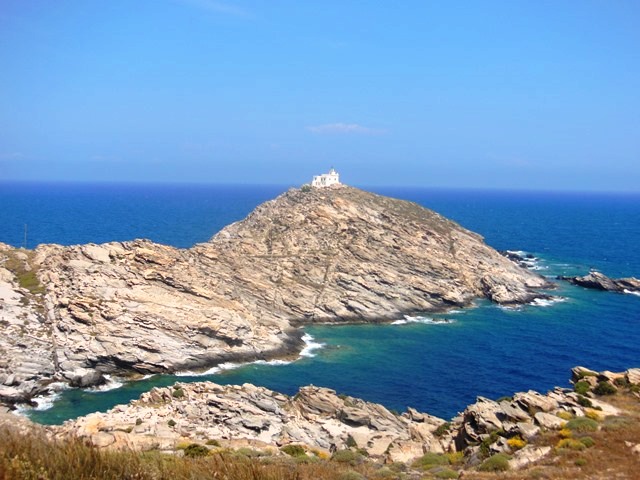
From Mykonos John and I enjoyed the 23NM trip (about five hours sailing) in 17-30kts wind to reach Paros Is while Maree and Colin endured the weather conditions again. Several times on this passage we heard the radio call for a ‘Pan-Pan’ emergency for a man lost over board - quite sobering reminder to remain viligent.  On arrival we anchored in a beautiful and expansive (and sheltered) Naousa Bay in the North of the island and enjoyed several days relaxing, hiking out to the lighthouse and swimming. 

The next dinner out?
We ended up completing a circumnavigation of Paros Is spending 16 days on this attractive, laid back island and enjoyed the quiet anchorages, good swimming beaches and lots of bays for walking. Paros is known for the abundance of pure white marble which was used in Napelon’s tomb. The island is well serviced by local ferries the run from the anchorages across the various bays which makes it easy to get off the boat and head into the local towns and between islands. A common sight on the island is octopus drying outside the taverna’s which is popular local dish. 
Piso Livadhi

After several days at Naousa Bay we motored for 2hrs around the top of the island and stopped at Pisa Livadhi town quay for several days and enjoyed another picturesque local scene and sheltered sandy beaches. Unfortunately this time the local’s recommendation for the taverna was disappointing with the octopus meals being returned and substituted for local fish n’chips - eating out is often a lottery as we are finding out.  While at Pisa Livadhi we caught the day ferry to Santorini a pleasant 2.5hrs ride without having to adjust any sails, check a course or complete the hourly log there was nothing to do but sit back and enjoy the ride.  

The entry to Santorini was somewhat foreboding with the sheer lava-layers cliffs dropping into the sea.  Despite the tourism, Santorini is a stunning island with white villages clinging to the imposing volcanic cliffs and dotted with numerous blue domed church’s. Santorini was formed by a massive volcanic eruption that destroyed part of this once-circular island in 1450BC.  The resulting under water crater is associated with the legend of the lost city of Atlantis.  We enjoyed the day meaning along the main town with it’s winding, narrow streets full of shops and restaurants perched on the clifftops.  We saw a novel way of collecting the town rubbish down a steep path using a donkey.

Memorial in private garden
After Piso Lavadhi we headed further around the island and anchored at Aliki which was a large anchorage with most days seeing 20 boats peacefully anchored.  We made the most of the visibly and clear water with John completing two dives to clean the hull while Leanne washed down the bootstrap.  Sabbaticus’s bottom is now smooth again and free of any growth. After beautiful sunsets it was time to haul anchor and sail the 22NM to the main town of Paroikia to secure ourselves before the next forecasted blow came through.  


Just enough room for us
Paroikia is the main ferry hub for Paros and an easy town to walk around with a real ‘working feel’ to it.  We found the best well stocked hardware store since leaving the UK in Paroikia with a few more items now crossed off the boat shopping list.  A trip by bus down the coast to the local dive shop enabled us to fill our dive tanks ready for the next boat dive. At Paroikia we were able to secure a berth in the town quay after the charter boats departed which made it easy for us to walk off the boat at anytime as opposed to a trip (which usually incurred a wet backside) ashore in the RIB.  We all enjoyed a relaxing few days at Paroikia and made the most of the local bakeries complete with an ice cream section, several meals out at a local taverna watch and walks to the different beaches depending on the weather.  

We then moved to Naxos Is which were perfect conditions for Maree and Colin's last sail on Sabbaticus with a light 10-15kt breeze and a short 20NM trip.  Naxos has been another enjoyable island to visit with the Venetian Castle on top of the hill.  We anchored under the major tourist attraction the marble arch which was part of a temple started in 530BC but never completed.  Naxos is our last stop with Maree and Colin who catch a ferry back to Athens to return to NZ. We will then have to adjust the two of us again as we sail further east to the Dodecanese group of islands next.

The next update will be from Maree and Colin to provide a 'first-time sailing' perspective of their holiday on Sabbaticus.  Below are a few more photos.


Saturday, 20 June 2015

Kythnos, Siros and Mykonos Islands

After leaving Poros Is we had our longest day of sailing, 46NM / 10hrs, to reach the group of Cyclades Islands. Our first stop was Kolona Bay in Kythnos which was a barren rocky island with sheltered anchorages. Kolona Bay was a beautiful stopover and we enjoyed the walk along the goat tracks to the sand bar that linked to another bay.  We also were able to swim ashore to enjoy the ‘hot springs pool’ which in reality was a puddle with enough room for 2-3 people to sit in. Watching the numerous herds of goats frolicking on the hills and shoreline made a pleasant change from traffic noises.  
 
Row, row, row your boat ..
After a couple of days we then moved around the island to the Loutra Bay.  With limited ‘swinging room’ in the anchorage we took a stern line ashore - another first time experience for us. This required Leanne rowing the dinghy while John holds the stern line and then secures it to the first available rocky ledge or tree onshore. On our second night (with gusty winds predicted) we decided to visit the local town quay and enjoyed the small village, walking the hills and a larger pool of hot springs off the beach which were a popular place to meet people.  


St George's Cathedral


It was then a short sail from Kythnos to Siros Is.  After a couple of nights anchoring at Finikas we sailed around the coast (17NM) to Ermoupoli, the capital and the ferry hub for the Cyclades Islands. This was a very busy port with Sabbaticus moored alongside the town quay and enjoyed the ambience of the town, visiting the numerous church's, wandering around the maze of streets and watching the super yachts, ferries and yachts arriving and departing. Stepping of the boat we were walking straight into the table and chairs of the local bars and tavernas - while we enjoyed the ambience of this scene in the wee hours of the morning it wasn't as appealing with the late night dinner's shooting the breeze. We are working away through the Greek cuisine at the local tavernas and bakeries and enjoying our spanakopita for lunch (spinach & cheese in filo pastry).  While it would have been good to stay another few days the constant ferry wash and gusts created a surge which became uncomfortable so we decided to move on to Mykonos (one of the published 'tourist' highlights).


Mykonos Town Quay
Although Mykonos was only a 21NM trip away the forecasted wind of 25kts quickly built to a 30-35kts on the beam and a maximum of 40kts once we were outside of the harbour. In these conditions Sabbaticus raced away under half a genoa (only) and still kept good speed with the small amount of sail up. This was not a pleasant trip for Maree and Colin who had to endure Force 7 conditions- the only positive note was this passage was a fast 3 hr crossing to the island. Berthing at the town quay in 40kts gusts and squeezing into a tight space is definitely easier with extra hands onboard to assist. The Mykonos town quay was a busy place with the local ferries and a cruise ship on the outer mole and two cruise ships at anchor.

Little Venice
The town of Mykonos is known at the tourist mecca of the Cyclades. From the town quay we caught a local ferry to the town city and  took in the sights and strolled around the maze of streets, walked through Little Venice where the sea laps up to the edge of restaurants / bars and the hilltop row of windmills (none in working condition) our experience was jaded by the three cruise ships in town on the same day.  On a fine day with no wind, fewer tourists the town would be dazzling with the white washed cube shaped houses stacked around the harbour and the many, many blue domed churches dotted around. 


We spent a few days at the town quay and enjoyed meeting other yachties and walking around the local area. Colin and Maree enjoyed a second day in Mykonos which was far more enjoyable than the first with no visiting cruise ships to destroy the ambiance of the village. After three days and the winds finally decreasing we then departed for Paros Is.
Mkyonos Windmills
Mykonos Church 

Sabbaticus dwarfed by Super Yacht in Ermoupoli town quay

Kythnos local 
Kythnos Anchorage

Tuesday, 26 May 2015

Athens & Poros Island

The 'toys locker'
We all enjoyed taking in the crowded city sights from Zea Marina in Piraeus.  Piraeus Port is the major port of Athens and is the largest passenger port in Europe and third largest in the world. While in Zea Marina we strolled along the quay to view the luxury yachts of the very rich that lined the marina - some were effectively small (and not so small) ships. Whilst we admired the superyachts,and the associated toys,we did not feel envious of the paid crew and were happy to return to our comparatively smalil 49ft home. Our stopover had also been planned for some spares to be delivered from Spain and the UK - however despite best laid log plans they failed to arrive even with one month's lead time. The challenges of cruising with no fixed address! 

The highlight of our Athens stopover was visiting the Acropolis and and the Parthenon. Athens is one of the world's oldest cities, with its recorded history spanning 3,400 years, and is widely referred to as the cradle of Western civilization. The Acropolis of Athens is an ancient citadel located on a massive rocky hill that dominates the cityscape. We were surprised at the size of the Acropolis and learned it covered a surface area of approx 3 hectares. The day we visited was incredibly hot and and crowded which curbed our enthusiasm and energy for spending another day to visit other tourist sites. We later learned we had unfortunately arrived on a 'free day' hence the crowds were even larger than usual. 
   
Enjoying the view

Departing Athens we enjoyed four hours sailing in near perfect conditions to Aigina Island which (initially) was an excellent introduction to sailing for Maree and Colin who were able to sit out the back of the boat and enjoy the sun. Unfortunately the wind increased as we approached the island and we bypassed the town quay and headed to an anchorage. As we are learning the forecasts are rarely accurate and we had an uncomfortable night at anchor as the wind changed direction. It was an early departure around the island to get some rest before sailing across to Poros Island.


Local fishing boats at the town quay
Poros Island was delightful, with our first night spent in a peaceful anchorage before moving to the town quay which has the benefits of being berthed close to the centre of the town to enjoy the local ambiance. While there we hired bikes and completed a circumnavigation of the hilly island (about 10kms), spent time walking through town through the back alley's and buying some supplies in the local chandlery. The town quay's are social places to meet other yachties, share stories about different anchorages and swap weather information - this seems to be a form of male bonding. Watching other yachts berth is a constant source of entertainment and opportunity to learn (often) from other's mistakes.  


After several days on Poros Is we departed to start cruising around the Cyclades area.  Below are some photos from Poros Is.

Local Yacht Chandlers  

Looking W from Poros Is to the mainland
Departing Poros Is and heading E to Kithnos


Tuesday, 19 May 2015

Cornith Canal Transit

Entrance to the Canal
After sailing the English Channel, Bay of Biscay, Atlantic Coast, and Ionian Sea we were on our final leg to cross into the Agean Sea. The shortest route from Sicily to the Agean Sea is via the Cornith Canal. With the canal closed on Tuesday's for maintenance, a 50% surcharge added for transiting on a Sunday and an extra 25% if you conduct a night transit we needed to plan our arrival at the canal entrance carefully. The extra costs were a good incentive to ensure we had our timings right!

Sabbaticus is #3 in the convoy


The Canal  is one of  of the most expensive canals per mile in the world - costing E270 (NZ$410) to transit the 3.2 miles.  The canal is only 25mtrs wide with a maximum permitted draught of 6.5mtrs and a maximum air height of 52mtrs. The impressive limestone walls rise to 79mtrs above sea level. There are two hydraulic bridges across the canal near each end. These bridges are lowered down onto the water with traffic lights indicating when you can enter into the canal. For yachts transiting the canal they may have to wait up to three hours for a commercial ship before entering the canal. Thankfully we only had a 30 minute wait before a container ship arrived for us to join a small convoy of three yachts following the ship through the canal.


For those interested in the history of the canal the following is an excerpt from The Greek Water Pilot Guide which advises the ancient Greek's used to drag ships across the isthmus on a paved road. At various times the Greek and Roman rulers worked out schemes for a canal but Nero was the only one to start digging. Using 6,000 Jews, he didn't even get to the rock before insurrections in Gaul diverted his energies. The present canal was started by the French and finished by the Greeks in 1893. It was enlarged after damage suffered during WWII and now comprises three bridges, a railway bridge and two road bridges.   


Greek Orthodox Church in Aigina
After transiting the canal we were now finally in the Agean Sea and had a couple of nights anchored off Aigina Island. While sailing to Aigina we observerd huge amounts of plastic materials and rubbish in the water - the most we had ever seen with our fishing line repeatedely snagging plastic bags. With a couple of days to spare and clear, clean water John cleaned the 'boot strap' (the waterline down to about 45cm of the boat). During this task John checked our anchor only to discover it was only half dug into the sand - not good when we were close to shore and the harbour breakwater!  After pulling up the anchor we then moved another 150mtrs and dug ourselves firmly into the sand this time.  During our time at anchor we enjoyed watching the continuous flow of ferries from Athens (20mins by ferry) the hydrofoil's were great to watch as their speed increased.


The holiday finally begins...
It was a short sail of 15NM across to Athens. Just as we dropped the sails John noticed a couple waving frantically at us from the marina breakwater. It was fantastic to see Maree and Colin (John's sister and brother-in-law) through the binocular's. After 3,700NM we had finally arrived in Athens on time and are ready to enjoy a holiday cruising with Maree and Colin for the next six weeks through the Greek Islands.

Below are some additional photos from of the Cornith Canal and our time on the Island of Aigina.


Saturday, 16 May 2015

Sicily to Greece

The trip from Sicily to Greece was our last big passage for the next few months.  While we had hoped for some wind the forecast was not favourable for the next 10 days, and waiting a couple of weeks at anchor was not an option as we needed to be in Athens to meet family. The passage was easy as we motored for 50hrs and only sailed for 8hrs. While it was frustrating to motor at least nothing broke enroute and our trusty Yanmar engine chugged on. As we raised the Greek flag a pod of dolphins paid us a visit which we took as a 'local welcome'. About 60NM offshore we were visited by two sparrows for many hours as they rested, however during Leanne's watch one of them sat down beside her and died.Thankfully John was able to perform the appropriate sea burial during his watch. Another bright coloured bird joined us for several hours sitting on the aft
seat with and kept an eye on us. 


After 2.5 days and 220NM we finally arrived on the island of Zakinthos in Greece. This was a picturesque bay with a local town quay for yachts, taverna's, bakery and mini-market. We decided to anchor out to enjoy the privacy (allowing us to shower on the swim platform) and solitude. During one walk we unfortunately confirmed there are snakes in Greece.  
Local fishing boat at Zakinthos

Several days later we moved oto Patras, the third largest city in Greece, which was a port of entry and chance to clear customs. While this process was relatively easy it extended to five hours of Leanne's day as she waited for the personnel shift change to obtain the necessary transit log and stamps from Customs and the Port Police. Patras Marina was in the heart of the city, a bit smelly and noisy with the waterfront bars packed until the early hours of the morning with students. There was little civic pride evident with rubbish on the streets, overgrown weeds, broken pavements and buildings in dire need of repair. This was all part of the atmosphere that was relaxed with locals who were willing to assist.


With our jobs completed and the main tourist sites visited two days later we were departing Patras. The highlight on this short trip was passing under the Rion-Andirrioni suspension bridge to enter the Gulf of Cornith. The bridge was completed in 2004 and is the longest cable-stayed bridge in the world at 2.25 miles long with an air height of 45mtrs. Next stop was a picturesque bay at Trizonia. This bay was a small fishing hamlet which was lush and green covered in vines and olives - a peaceful place to rest for a night. It was then onto Itea where we moored alongside the town quay and saw our first NZ yacht!
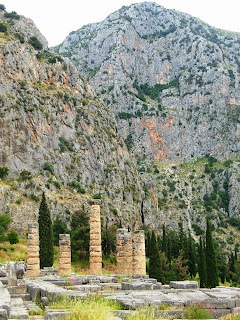


The stopover in Itea was solely to visit Delphi which is acknowledged as one of the most spectacular and beautiful classical sites in Greece set admist the ravines, rocky bluffs and sheer cliffs of Mt Parnassos. Delphi was regarded in as the religious and spiritual centre of the ancient Greek world and is best known for the oracle at the sanctuary that was dedicated to the god Apollo. It was during Apollo's time, starting in 586 BC, that athletes from all over the Greek world competed in the Pythian Games - a precursor of the Modern Olympics.


Our social lives are improving now that we are into the cruising areas. We are enjoying the multi-national community of sailing and meeting other liveaboard couples, hearing their stories and learning from their experiences while sharing meals out or drinks onboard.  One inspirational Brit couple were still sailing in their 70's. We also are learning to avoid being next to French boats who seem to come into all areas at high speed and little regard to others.  Our last French 'neighbour' hit our bow anchor on departure - just as well our anchor was bigger than his and did not sustain any damage as he hit his sides and stern into the concrete wall on departure.

Below are some photos from our anchorage in Zakinthos and Delphi.


Now we have the Cornith Canal to look forward to.
Friday, 1 May 2015

Sardinia to Palermo, Sicily

Entry to Palermo Marina
This passage of 215NM from Sardinia to Sicily started out perfectly with good wind and relatively flat seas - we should have realised this was too good to be true for the entire trip. The wind then started to build and increased to gusts of 35kts (not forecasted) on the nose!  Not comfortable at all and required us to put up the storm sail with the main reefed for the next 24hrs. Needlessly to say this was the hardest passage since we left Gib and our friend, the chucka bucket, was put to good use again. On arrival Leanne had to 'negotiate' via sign language for a berth as there was none to be had (all the advertised 24hrs marina staff appeared to be at siesta or would not answer radio or phone - not unusual ). Ultimately we put the boat in an impossibly tight berth stern to - just what you need at the end of an exhausting two day passage.

Siesta for all locals...
We enjoyed three days in Palermo on the west coast of Sicily (the largest island in the Med). Sicily has a population of five million; Palermo is approx 650,000 and is considered to be the most conquered city in the world. With history dating back to the 8th century and numerous museum's, palaces, castles and church's the sheer quantity, size and detail of the architecture was impressive. During WWII Palermo suffered heavy bombing which is still evident today in the buildings. The scenery is breathtaking with rugged hills, centuries of history, culture and a foodies delight with fresh pasta, olives, salami's and copious choice of quality red wine - making Sicily an enchanting place to visit. Although we didn't see any Mafia they remain a predominant influence in the city and the whole of Sicily.  

In the Messina Straits - still no fish!
An easy landmark to spot
Our next passage was across the top of Sicily and down through the Straits of Messina which separates Sicily from mainland Italy and is only 1.5miles wide at the northern end with an impressive radio tower that dwarfed the lighthouse. During this short passage of 130Nm we went to anchor for several hours during the night to wait for the wind which increased as forecasted to gusts of 40kts - thankfully the wind was behind us so a lot more comfortable angle of sail. 

We then spent a couple of days anchored in Cape Taormina with stunning scenery all around us with Mt Etna making a breathtaking view each morning. Mt Etna, at 3,329mtrs, rises majestically above the Cape and is the most active volcano in Europe. Thankfully we did not see any activity during our stopover!

View from the 'back door'

View from the bow
Another day on passage ends ....

Next landfall is planned for Greece.